Scaling AI Through Multi-Agent Collaboration
🎓 Columbia University DAPLab
🚫
The Single-Agent Limitation
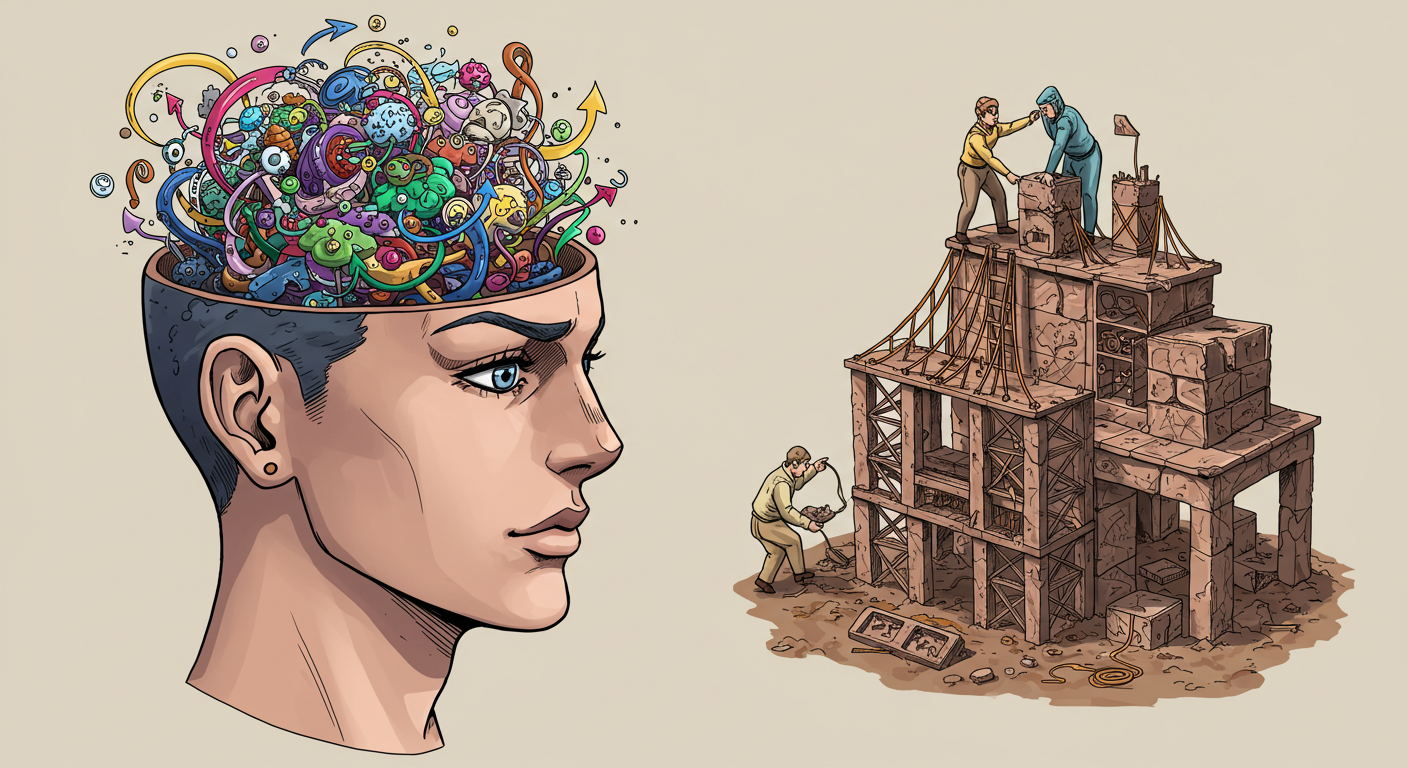
Siloed Thinking: Single models miss diverse perspectivesLimited Context: No peer review or validationSequential Processing: Linear, not parallel explorationFixed Approach: Limited mid-task adaptation to new information
From Isolation to Collaboration
🤝
The Promise of Multi-Agent Collaboration
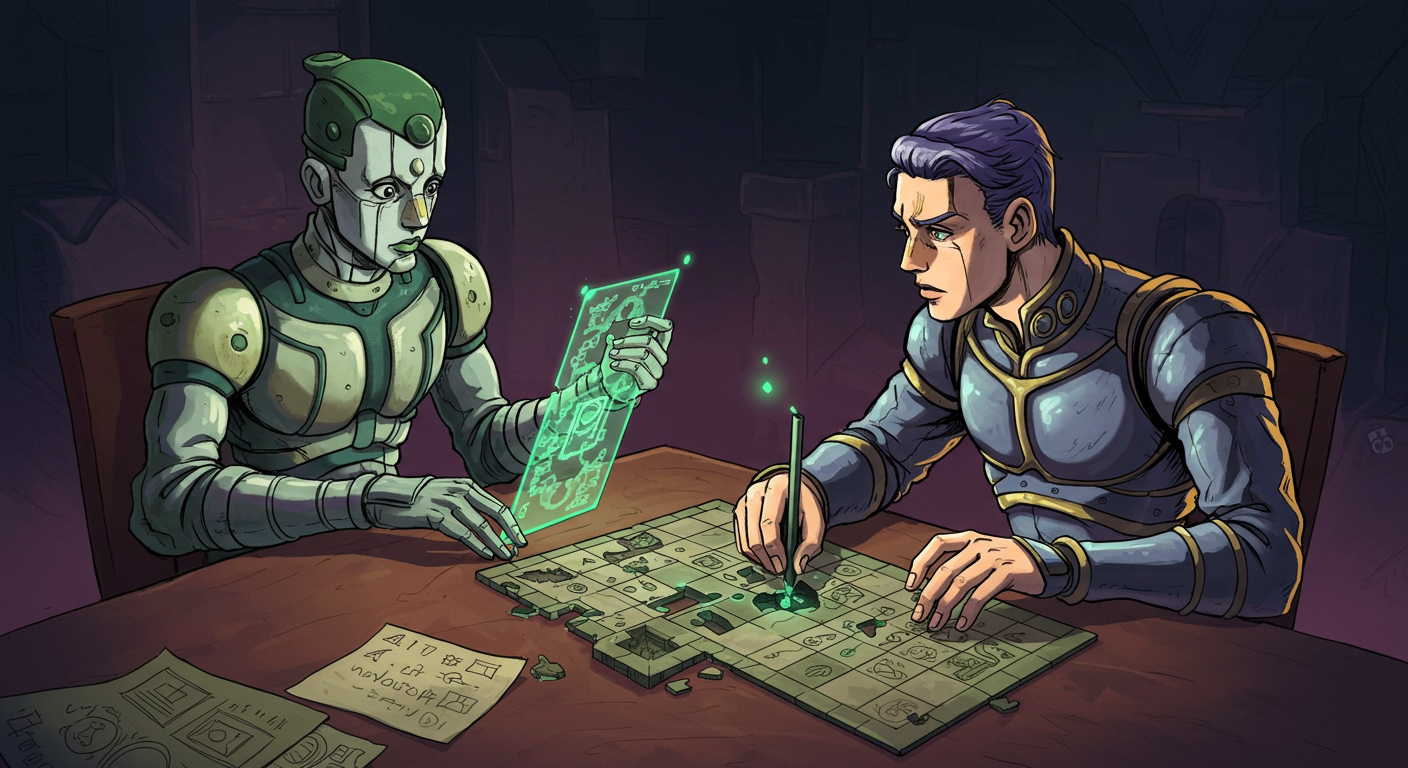
Study Group Dynamics: Like humans collaborating on complex problemsCross-Model Synergy: Leverage unique strengths of Claude, Gemini, GPT, GrokParallel Processing: Multiple perspectives tackle same task simultaneouslyReal-time Intelligence Sharing: Agents learn and adapt from each other
The Promise of Collaborative Reasoning
🏗️ Built on AG2's foundational multi-agent research and community
🏗️
AG2: The Foundation for Multi-Agent Research
🤝 Community-Driven Innovation
MassGen evolved from AG2's pioneering work in multi-agent conversations
📈
Proven Performance Gains - Grok Heavy Evidence
Grok-4 Standard
1
Single Agent Processing
38.6%
Last Human Exam Score
$30/month
Grok-4 Heavy
Multi-Agent Collaboration
44.4%
Last Human Exam Score
$300/month
+15% Performance Boost Multi-agent "study group" approach outperforms single agent "The exploration of the art & science of multi-agent collaboration has just started."
🚀
MassGen Orchestrator
Task Distribution & Coordination
↓
🏗️
Agent 1
Anthropic/Claude
↕ Real-time Collaboration ↕
↓
🔄
Shared Collaboration Hub
Real-time Notification & Consensus
Key Features & Capabilities
🤝 Cross-Model Synergy: Harness strengths from diverse models⚡ Parallel Processing: Multiple agents tackle problems simultaneously🔄 Iterative Refinement: Non-linear reasoning through cycles of improvement👥 Intelligence Sharing: Agents share working summaries, tool results, and insights in real-time🎯 Consensus Building: Natural convergence through collaboration
Iterative Refinement: The Reality of Reasoning
⚙️
Tech Deep Dive: Async Streaming & Dynamic Scheduling
🔄 AsyncGenerator Pattern: Real-time streaming from 5+ agents simultaneously⚡ Dynamic Task Management: Agents start/stop based on voting status🔁 Graceful Restart & Wrap-up: Dynamic wrapping-up as part of scheduling
Orchestrator
Agent 1
Agent 2
Agent 3
Agent 4
content
tool_calls
reasoning
🔁 Restart Trigger
When Agent 2 provides new_answer
restarting
restarting
restarting
Key Innovation: Dynamic coordination without deadlocks
🔧
Tech Deep Dive: Backend Abstraction Challenges
🎭 Unified Interface: Standardized ChatAgent protocol for 8+ different backends🛠️ Tool Integration: Web search, code execution, MCP⚙️ StreamChunk Normalization: Convert diverse response formats to common protocol🔀 Backend-Specific Workarounds: Each provider has unique limitations
Backend Challenges:
Claude Code CLI
Context sharing across agents
Gemini API
Can't mix builtin + custom tools
GPT-5
API change (reasoning, streaming etc.)
Most Backends
Unable to autonomously collaborate
🎯 Our Solution:
Binary Decision Framework & Advanced Workspace Sharing
Result: Unified interface with backend-specific optimizations
🎯
Tech Deep Dive: Binary Decision Framework Solution
⚖️ Binary Choice: Each agent must choose: vote OR new_answer💥 Vote Invalidation: Any new_answer invalidates ALL existing votes🔄 Reset & Restart: All agents restart with updated answer context🎭 Anonymous Voting: Agents see "agent1", "agent2" etc.
Round 1: Agents 1,3,4 vote for Agent 4
Vote: agent4
No vote yet
Vote: agent4
Answer+Vote
⚡ Agent 2 provides new_answer
new_answer
Round 2: All agents restart with 2 answers
restart_pending
Has new answer
restart_pending
Has old answer
Each agent decides: vote OR new_answer
🔑 Any new_answer resets ALL votes
Votes from Round 1: ❌ INVALID
New decisions needed based on 2 available answers
Key Innovation: Dynamic equilibrium through vote invalidation
⚠️
The Context Sharing Challenge
❌ Naive Approach 1: Share Answers Only
Agents only see final text answers
Can't verify methodology or data
Unable to test or build upon work
Lost intermediate context
❌ Naive Approach 2: Share Workspace Paths
Agents interfere with each other's work
Data corruption from simultaneous edits
Loss of original work context
Workspace pollution and conflicts
Approach 1: Answer Only
Agent 1
Agent 2
"Answer text"
❌ No verification possible
Approach 2: Workspace Sharing
Agent 1
Agent 2
Shared
Workspace
⚠️ Conflicts!
❌ Data corruption & interference
The Challenge: How to share context without interference?
✅
Our Context Sharing Solution
📸 Workspace Snapshots: Orchestrator captures agent workspaces after each round📁 Temporary Directories: Each agent gets a clean temp workspace with all snapshots🎭 Anonymous Mapping: agent1/, agent2/ folders preserve anonymity🔒 Clean Separation: Read from temp dir, write to permanent workspace🔄 Context Preservation: Snapshots linked to coordination rounds
Orchestrator
Snapshot Storage
agent1/
agent2/
Agent 1
Permanent WS
Temp Context
Agent 2
Permanent WS
Temp Context
context
sharing
Agent 1 Temp Copy
agent1/
agent2/
Own temp copy
Agent 2 Temp Copy
agent1/
agent2/
Own temp copy
✅ Safe Context Sharing + ✅ No Interference + ✅ Full Verification
🎬
Context Sharing in Action
🔬 Round 1: Agent 1 (Data Scientist)
• Creates analysis.py and results.csv📸 Snapshot captured
🧪 Round 2: Agent 2 (Code Reviewer)
• Sees agent1/analysis.py in temp workspaceReads & tests the analysis codedon't affect Agent 1improved_analysis.py in own workspace
🎯 Final Presentation
• Winning agent has full context correct version access
🗂️ Workspace Structure
👨💼 Agent 1 Permanent Workspace
📄 analysis.py
👁️ Agent 2 Temp Workspace (Read-Only Context)
📁 agent1/readable & testable
👨💻 Agent 2 Permanent Workspace
📄 improved_analysis.py
🔑 Key Benefits Illustrated:
✅ Agent 2 can READ & execute Agent 1's work
📊
Benchmarking: Preliminary Results
Scientific evaluation across graduate-level reasoning, instruction-following, and narrative tasks
🧪 GPQA-Diamond
Graduate Physics/Chemistry
📋 IFEval
Instruction Following
📖 MuSR
Narrative Reasoning
🏆 Overall Champion
MassGen: 81.2%
Wins 2/3 benchmarks • Statistically significant
✅ Key Results:
• Highest on 2/3 benchmarksBest overall averageConsistent performance
📈 Statistical:
• vs Claude: p = 1.4e-07 ⭐⭐⭐p = 1.1e-28 ⭐⭐⭐
🔬 Research Gap:
• Oracle: 95.5% (GPQA)Actual: 87.4%Potential: 8.1 points
🔬
Case Study: Success Through Peer Correction
Graduate-level physics question from GPQA-Diamond benchmark
🌌 The Problem
A quasar shows a peak at 790 nm wavelength. Given Lambda-CDM cosmological parameters
(H₀ = 70 km/s/Mpc, Ωₘ = 0.3, ΩΛ = 0.7), what is the comoving distance?Options: A) 8 Gpc B) 7 Gpc C) 6 Gpc D) 9 Gpc
🎯 Final Result
✅
Correct Answer: A (8 Gpc)
Orchestration succeeded where individual agents initially failed
🤖 Round 1: Initial Answers
Claude: "I calculate ~6 Gpc → Answer C"GPT-5: "I get ~8.95 Gpc → Answer D"Gemini: "~6.1 Gpc → Answer C"
🔄 Self-Correction Process
Claude observes: "There is significant discrepancy in calculations:
Agent1 gets ~6.1 Gpc, Agent2 gets ~8.95 Gpc. Let me re-examine..."
✨ Breakthrough Moment
Claude revises: "Standard cosmological calculators yield 8000-8500 Mpc
for z=5.5. This equals 8.0-8.5 Gpc, closest to option A."Result: 3/4 agents converge on correct answer
💡 Success Mechanism: Peer observation → Discrepancy detection → Self-correction → Consensus
⚠️
Case Study: When Good Analysis Goes Wrong
Understanding current limitations and improvement opportunities
🔭 The Problem
"How many stars would be detectable using the ESPRESSO spectrograph
with S/N ≥ 10 in 1-hour exposure?"Candidates: Canopus, Polaris, and 4 synthetic starsCorrect Answer: 2 stars (Canopus saturates detector)
❌ Orchestration Failed
✗
Wrong Answer: 3 stars
Despite Claude having the correct reasoning
✅ Claude (Correct)
"Canopus is too bright and would saturate the detector
in a 1-hour exposure. Only 2 stars are detectable without saturation."
❌ Others (Detailed but Wrong)
GPT-5, Gemini, Grok: Provided comprehensive magnitude calculations
but failed to consider detector saturation → concluded 3 stars
🎯 What Happened
Orchestration selected Gemini for having "most accurate and comprehensive reasoning,"
prioritizing analysis quality over correctness
🔍 Root Cause:
System confused detailed explanation with correctness
💡 Improvement Opportunity:
Better balance reasoning quality and answer validation
🧠
Coordination Psychology: How Voting Behavior Changes
Controlled experiments reveal how coordination mechanisms shape multi-agent behavior
🎭 Identity Disclosure Effects
Anonymous Voting (Baseline)
Agents see: "agent1", "agent2", "agent3", "agent4"
Identified Voting
+7.4% increase in self-votingConsensus ties: 14.1% → 23.2%
Agents see: "GPT-5", "Claude", "Gemini", "Grok"
👁️ Vote Visibility Effects
Hidden Tally (Baseline)
First-voted Selected
54.1%
Agents vote independently without seeing others' choices
Visible Tally
First-voted Selected
67.8%
+13.7% herding behaviorEspecially strong: GPT-5 (+40%)
Agents see ongoing vote counts and reasons
🎯 Key Behavioral Insights
🎭
Identity Matters
Knowing "who said what" increases bias and reduces consensus
🐑
Herding Behavior
Visible votes create momentum effects, sometimes premature consensus
🚀
MassGen Evolution: v0.0.1 → v0.0.16
🏗️
Foundation Era
v0.0.1 - v0.0.3
Core framework, basic streaming,
LATEST
🚀
Rapid Evolution
v0.0.3 → v0.0.16
Claude Code CLI, GPT-5, 10+ providers
15 Releases
•
25+ Days Foundation→Expansion
🌟
Early Adopters & Community Growth
🏢 Industrial Institutions
Microsoft Azure Gradient Sparsity Leading Trading Firm AgentWeb
🎓 Academic Institutions
Simon Fraser University UC Berkeley & Santa Cruz University of Pennsylvania University of Sydney University of Toronto
🚀 Open Source Community
Active development
Growing contributor base
Global adoption
Research partnerships
🤝 Community Contributors - Thank you!
🎬
Live Demonstrations
🌐 LLM Fun Facts Website (v0.0.14): Claude Code agents create interactive websites with enhanced logging and workspace isolation
Result: Conflict-free parallel development with comprehensive versioning
📋 Notion MCP Integration (v0.0.15): Gemini agents generate and store todo lists via external API with real-time verification
Result: Seamless external tool integration and persistent output management
🏆 IMO 2025 Winner Research: Multi-agent fact-checking → unanimous consensus on Google DeepMind victory
Result: Accurate identification despite conflicting information
💰 Technical Analysis: Complex Grok-4 HLE pricing calculation through iterative refinement
Result: Accurate cost estimates through collaborative validation
🎓
Columbia Research Applications
🧬
Computational Biology
Multi-agent protein folding prediction, drug discovery optimization, and genomics research acceleration
📚
Digital Humanities
Collaborative text analysis, historical document processing, and linguistic research
🏗️
Engineering
Distributed system design, infrastructure optimization, and smart city planning
💼
Business School
Market analysis, financial modeling, and strategic decision-making through AI collaboration
🏛️ Research Collaboration Possibilities
Ready to explore multi-agent AI research collaborations
⚡
Get Started in 60 Seconds
# 1. Clone and setup
✅ Supported Models & Providers
🏢 Major Providers:
Anthropic Claude & Claude Code • Google Gemini • OpenAI GPT • xAI Grok • ZAI GLM
🏠 Local & Extended:
Cerebras • Fireworks • Groq • LM Studio • OpenRouter • Together...
🛠️ Advanced Tools
Web Search • Code Execution • MCP Tools • File Operations • Browser Automation
🔮
Vision: The Path to Exponential Intelligence
Hurdles: Shared memory, context, interoperabilityRoadmap: More models/agents, web UIVision: Recursive agents bootstrapping intelligence
Agents
Grok
Gemini
Claude
GPT
AG2
Systems
Grok Heavy
DeepThink
Claude Code
ChatGPT
AG2
Orchestrator
MassGen
1×
10×
100×
Challenges
Consensus
Shared Context
The Path to Exponential Intelligence
🚀
Join the Multi-Agent Revolution
Build Scalable, Collaborative AI Systems
🚀 v0.0.3→v0.0.16 Latest | 10+ providers; Claude Code CLI; GPT-5 & GPT-OSS; Local Models; MCP Integration; Unified Filesystem
Thank you Columbia DAPLab! Questions & Discussion